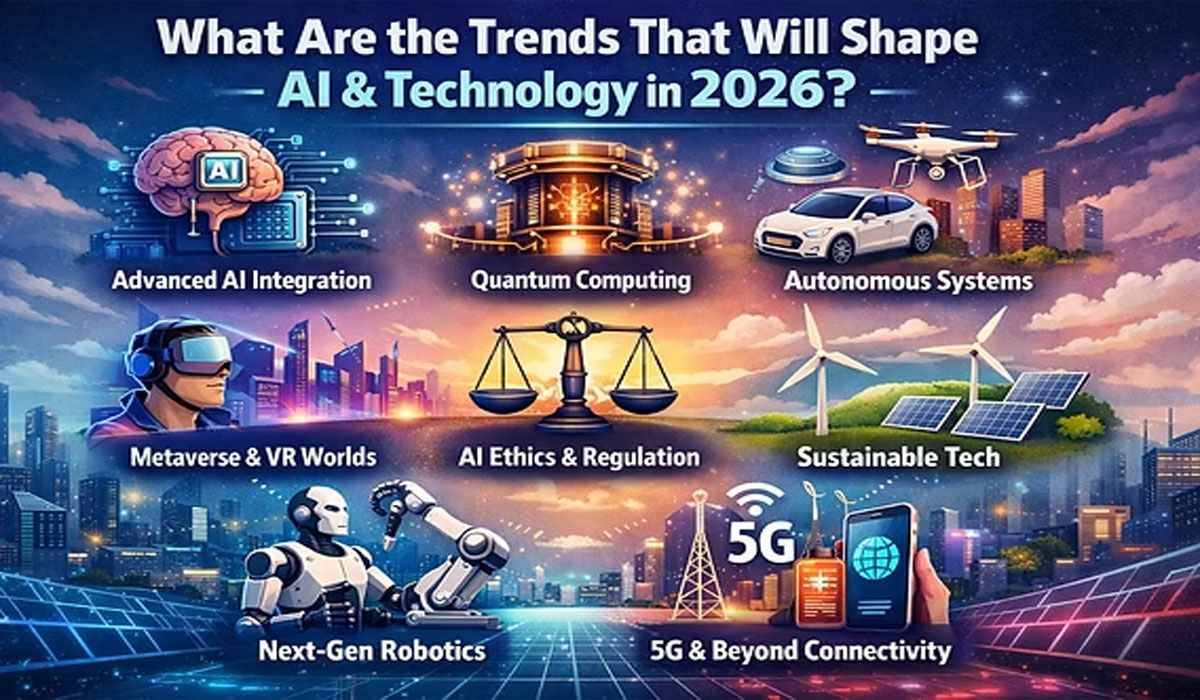
Beyond Generative AI: The Emerging Technologies That Could Define the Next Digital Revolution
Discover emerging technologies beyond generative AI, including quantum computing, robotics, biotechnology, and advanced networks that could reshape the digital future.
Generative artificial intelligence has attracted worldwide attention, but the next digital revolution will likely involve many technologies working together. Advances in computing, automation, biotechnology, and communications are creating new ways to solve complex problems and improve existing systems.
These developments may influence industries ranging from healthcare and manufacturing to transportation and scientific research. Although some innovations remain experimental, understanding their potential helps businesses, researchers, and individuals prepare for a rapidly changing technological landscape.
Discover a wide range of the latest information, breaking news, and in-depth reviews that will broaden your perspective on various engaging topics. Find out more, only at Two Rates Media.
Quantum Computing and Complex Problem Solving
Quantum computing uses principles of quantum physics to process information in ways that differ from conventional computers. Researchers are investigating its potential to address specialized problems involving molecular simulation, materials science, optimization, and cryptography.
Practical applications remain limited by technical challenges such as error correction, hardware stability, and operating complexity. Rather than replacing ordinary computers, quantum systems may eventually complement existing infrastructure for tasks where their unique capabilities provide meaningful advantages.
Robotics and Autonomous Systems
Robotics is expanding beyond traditional industrial assembly lines into warehouses, agriculture, healthcare support, and other specialized environments. Improvements in sensors, machine vision, and control systems allow robots to perform increasingly complex tasks under human supervision.
Autonomous systems can help organizations handle repetitive or physically demanding work, potentially improving consistency and workplace safety. However, companies must address maintenance costs, operational reliability, workforce training, and the limitations robots encounter in unpredictable environments.
Biotechnology and Personalized Medicine
Biotechnology combines biological research with advanced analytical tools to develop new approaches to medicine, agriculture, and environmental management. Progress in genetic analysis, laboratory automation, and computational biology can help researchers investigate diseases and understand biological processes more precisely.
Personalized medicine may allow healthcare professionals to tailor selected treatments according to individual characteristics and clinical evidence. Researchers must still evaluate safety, effectiveness, affordability, privacy, and ethical considerations before translating experimental findings into routine medical practice.
Advanced Networks and Connected Infrastructure
Future communication networks are expected to support growing demand for connected devices, real-time services, and data-intensive applications. Improvements in network performance can help autonomous equipment, industrial sensors, and remote monitoring systems exchange information more efficiently.
However, faster connections alone cannot guarantee reliable digital services. Infrastructure investment, cybersecurity, interoperability, and access in underserved communities will determine how widely these capabilities benefit businesses and individuals.
Spatial Computing and Immersive Experiences
Spatial computing combines digital information with physical surroundings through technologies such as augmented reality, virtual reality, and advanced three-dimensional interfaces. These systems can help users interact with digital objects in ways that resemble real-world activities.
Potential applications include technical training, product design, remote collaboration, education, and medical visualization. Wider adoption will depend on device comfort, software quality, practical usefulness, and whether organizations can demonstrate clear benefits over conventional tools.
Also Read: Build Wealth Faster with This Powerful Crypto Pillar Method
Energy Storage and Next-Generation Materials
Advances in batteries, power electronics, and materials science could support more efficient energy systems and electronic devices. Researchers are exploring technologies that may improve energy storage, extend equipment lifespans, and reduce resource requirements in selected applications.
Turning laboratory discoveries into affordable products requires manufacturing improvements, reliable supply chains, and extensive testing. Environmental impacts also matter because extracting raw materials and producing electronic components can create waste and consume substantial energy.
Cybersecurity in an Increasingly Connected World
As digital infrastructure expands, organizations must protect sensitive information, connected devices, and essential services from increasingly sophisticated threats. Emerging security methods include stronger identity verification, improved threat detection, and cryptographic approaches designed for future computing risks.
Technology alone cannot eliminate cybersecurity problems. Regular software updates, employee training, secure system design, and clear incident response procedures remain important components of effective digital protection.
Conclusion
The next digital revolution will extend beyond generative AI into computing, biotechnology, robotics, communications, energy, and cybersecurity. These technologies could create significant opportunities, but their impact will depend on scientific progress, responsible development, and practical implementation.
Organizations that evaluate emerging innovations carefully can identify useful applications without overlooking cost, safety, and ethical concerns. The most meaningful advances will come from technologies that solve real problems and deliver dependable benefits to society.